In the high-stakes world of New York City hospitality, the kitchen is the engine room. Whether you are running a Michelin-starred establishment in Tribeca, a high-volume diner in Queens, or a bustling ghost kitchen in Brooklyn, your kitchen exhaust system is the single most critical component of your facility’s safety infrastructure.
Yet, it is often the most neglected.
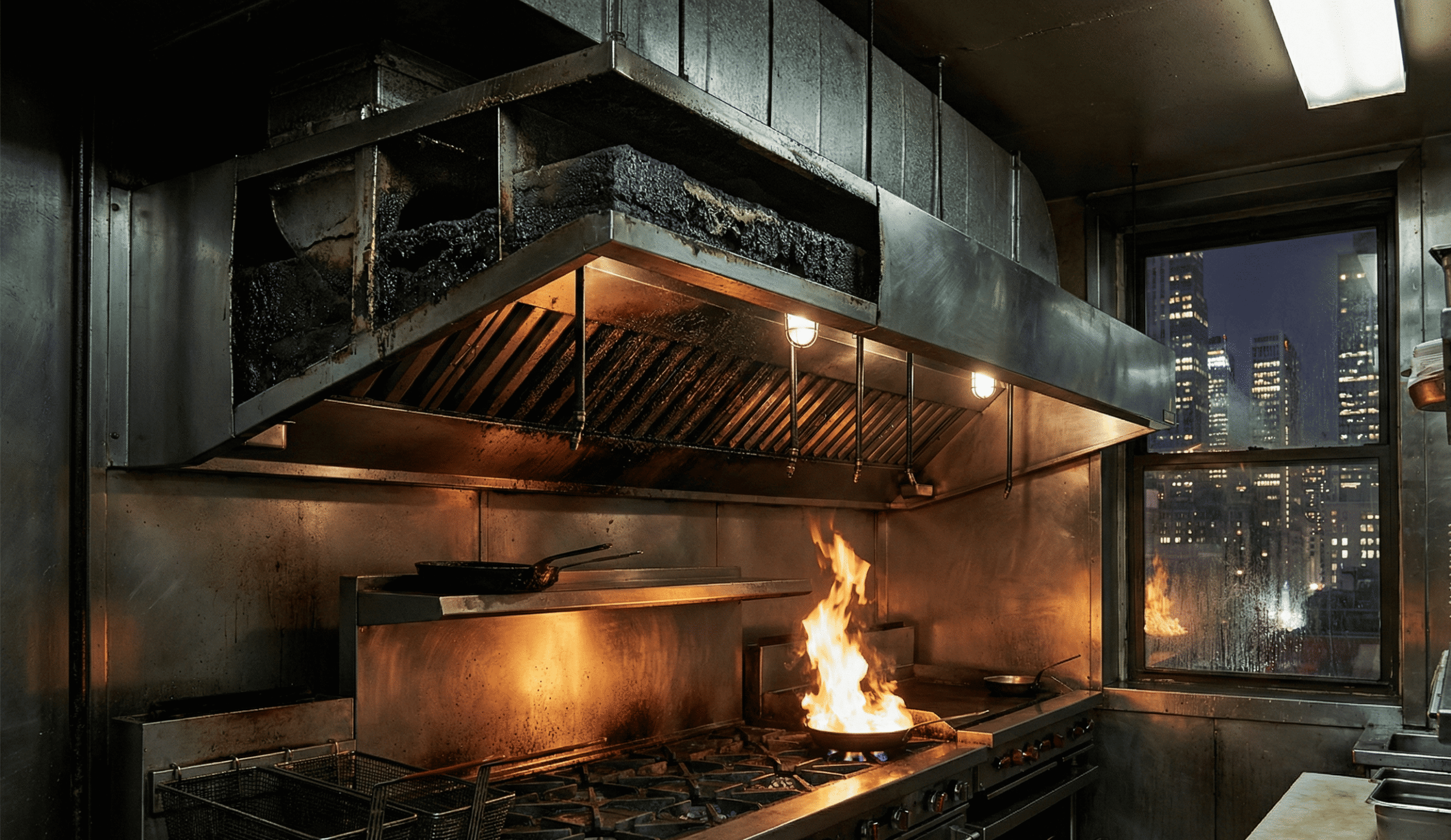
Out of sight behind stainless steel baffles and hidden above dropped ceilings, grease accumulation poses a catastrophic risk. In NYC, where buildings are stacked on top of one another and commercial kitchens often sit below residential apartments, a grease fire is not just a business disruption it is a potential tragedy.
This guide provides a deep dive into the technical, legal, and operational necessities of kitchen hood and exhaust cleaning in New York City.
The Anatomy of the Threat: Understanding Grease Buildup
To understand why professional cleaning is non-negotiable, you must understand the enemy: Grease-Laden Vapor.
Every time you sear a steak, fry a batch of calamari, or char-broil a burger, you are releasing vaporized oils into the air. Your exhaust fan pulls this vapor up through the hood filters and into the ductwork. As this vapor travels away from the heat source, it cools and condenses back into a liquid, eventually hardening into a sticky, flammable resin.
The “Fuel Load” Danger In fire safety engineering, this accumulated grease is referred to as “fuel load.” Grease has a flashpoint. If a flare-up on the grill gets high enough, or if a spark is sucked into the intake, that hardened grease in the ductwork can ignite.
In a clean system, a flare-up is contained in the hood. In a dirty system, the ductwork acts like a fuse. The fire can race up the duct sometimes traveling 10, 20, or 30 stories up a high-rise building shaft igniting the roof and potentially spreading to adjacent floors.
The NYC Regulatory Landscape: FDNY & NFPA 96
New York City has some of the strictest fire codes in the world, enforced rigorously by the FDNY. Operating a commercial kitchen here requires strict adherence to NFPA 96 (Standard for Ventilation Control and Fire Protection of Commercial Cooking Operations) and the NYC Fire Code.
The “Certificate of Fitness” Requirement In NYC, you cannot simply hire a janitor to clean your hood. The cleaning must be performed by a company holding a specific FDNY certification. The technicians themselves often need to hold a P-64 Certificate of Fitness (Commercial Kitchen Exhaust System Cleaning Technician).
Frequency of Cleaning How often should you clean? The FDNY and NFPA 96 dictate the schedule based on your cooking volume and fuel type:
- Solid Fuel (Wood/Charcoal): Monthly. (If you have a wood-fired pizza oven or charcoal pit, the ash and creosote buildup is highly combustible).
- High-Volume Cooking (24-hour diners, fast food): Quarterly.
- Moderate-Volume Cooking: Semi-annually.
- Low-Volume (Camps, seasonal, churches): Annually.
Note: Most standard NYC restaurants fall into the Quarterly (every 3 months) category.
The Professional Cleaning Process: Beyond the “Shin-Deep” Clean
A major issue in the industry is the prevalence of “sticker slappers” companies that clean only the visible stainless steel hood to make it look shiny, slap a compliance sticker on it, and leave the dangerous ductwork untouched.
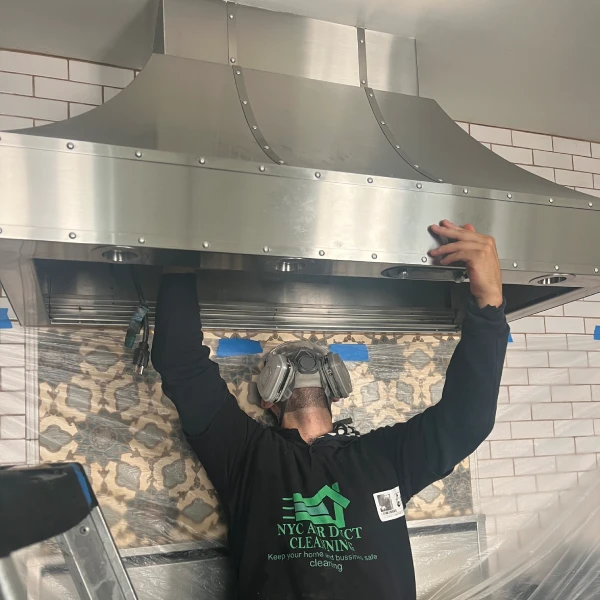
At NYC Air Duct Cleaning, we adhere to a “Bare Metal” standard. Here is what a true, code-compliant cleaning process looks like:
1. Preparation and Containment
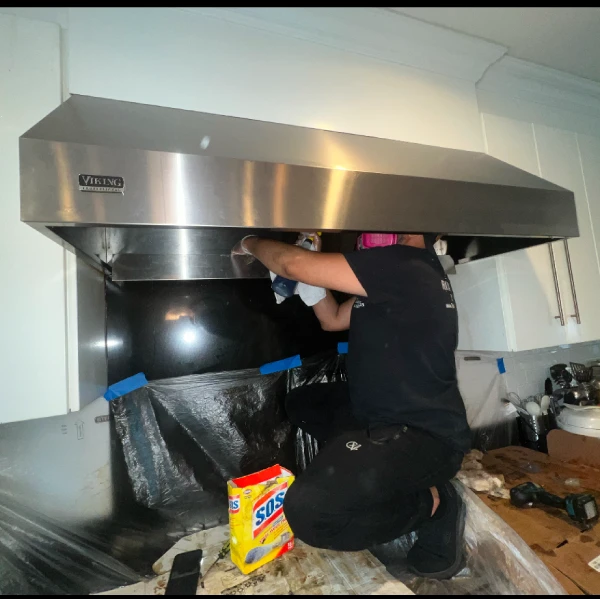
Commercial kitchens are full of sensitive equipment. Before a single drop of water is sprayed, our team covers fryers, ranges, and prep surfaces with heavy-duty plastic sheeting. We funnel the wastewater into designated drums to prevent grease from entering the city sewer system (which is another violation).
2. Degreasing the “Inaccessible”
The hardest part of the job is the ductwork. We apply an industrial-grade, foaming alkaline degreaser that breaks down the molecular bond of the polymerized grease. This isn’t dish soap; it is a heavy-duty chemical agent designed to dissolve carbonized oil.
3. High-Pressure Washing
Using hot water pressure washers (often heating water to over 200°F) and specialized spinner nozzles, we scour the interior of the ductwork. This includes:
- The Horizontal Runs: The ducts running through your ceiling.
- The Vertical Risers: The shafts going up the building.
- The Exhaust Fan: The fan on the roof is often the most heavily soiled area. If the fan blades are unbalanced by heavy grease, it ruins the motor bearings and reduces airflow.
4. Access Panel Usage
If your ductwork has turns or long runs, we cannot clean it from the hood alone. We utilize (and can install) fire-code-compliant access panels. These allow us to physically reach into the ductwork to scrape and clean areas that would otherwise be hidden fire hazards.
5. Polishing and Certification
Once the system is stripped to bare metal, we polish the stainless steel hood canopy to a high shine. Finally, we affix the FDNY-compliant inspection sticker, detailing the date of cleaning and the next due date. We also provide a detailed service report with before-and-after photos essential documentation for your insurance carrier.
The Hidden Benefits of a Clean Exhaust System
While fire safety is the primary driver, a clean hood system directly impacts your bottom line in other ways.
1. Improved Airflow & Temperature Control A grease-clogged fan rotates slower and moves less air. This means smoke and heat stay in the kitchen. In an NYC summer, a hot kitchen leads to heat exhaustion for staff and slower ticket times. Cleaning the fan restores proper airflow, keeping your line cooks cooler and more productive.
2. Energy Efficiency When your exhaust fan has to fight against layers of sludge, the motor works harder and draws more amperage. A clean fan runs efficiently, lowering your electricity bill and extending the life of the expensive fan motor.
3. Odor Mitigation That rancid, stale oil smell that lingers outside some restaurants? That comes from rotting grease in the ductwork. In dense neighborhoods like the West Village or Park Slope, neighbors will complain about odors. A clean system exhausts air efficiently and reduces odor complaints.
Conclusion: Protect Your Investment
In New York City, your restaurant is your legacy. Don’t let a preventable grease fire destroy what you have built.
Whether you are managing a single location or a franchise group, you need a partner who understands the unique architecture and regulations of the five boroughs. You need transparency, photographic proof of work, and technicians who are certified to handle the job safely.
NYC Air Duct Cleaning is your partner in compliance and safety. We don’t just clean hoods; we protect businesses. Contact us today to schedule your free system inspection and keep your kitchen running safe, clean, and legal.